There Is No Standard Menu
Last month, I was in Montreal for work and brought my family along.
One evening, we were trying to decide where to go for dinner and, almost on a whim, made a reservation at an Indian restaurant. With two kids who had never really been out for Indian food, and a few dietary considerations in the mix, it didn’t feel like the right choice.
So we bailed.
I canceled the reservation and we headed to another restaurant instead.
As we stood in line waiting for a table, my phone rang.
It was the restaurant we had just canceled.
The caller was polite and genuinely wanted to know if we still planned to come. There was nothing pushy about it. Just a simple question and a personal touch that caught me off guard.
We looked at each other and decided to give it a shot.
That phone call is what brought us to Darbar.
It turned out to be the highlight of the trip.
As we agonized over the menu, the owner and head chef, Simar Anand, came to our table. He did not start by selling us on the menu. He started by asking questions.
What do the kids usually like?
What should we avoid?
How adventurous did we want to be?
Then he built the meal around us.
That was the difference. It was not generic hospitality. It was diagnosis, judgment, and execution.
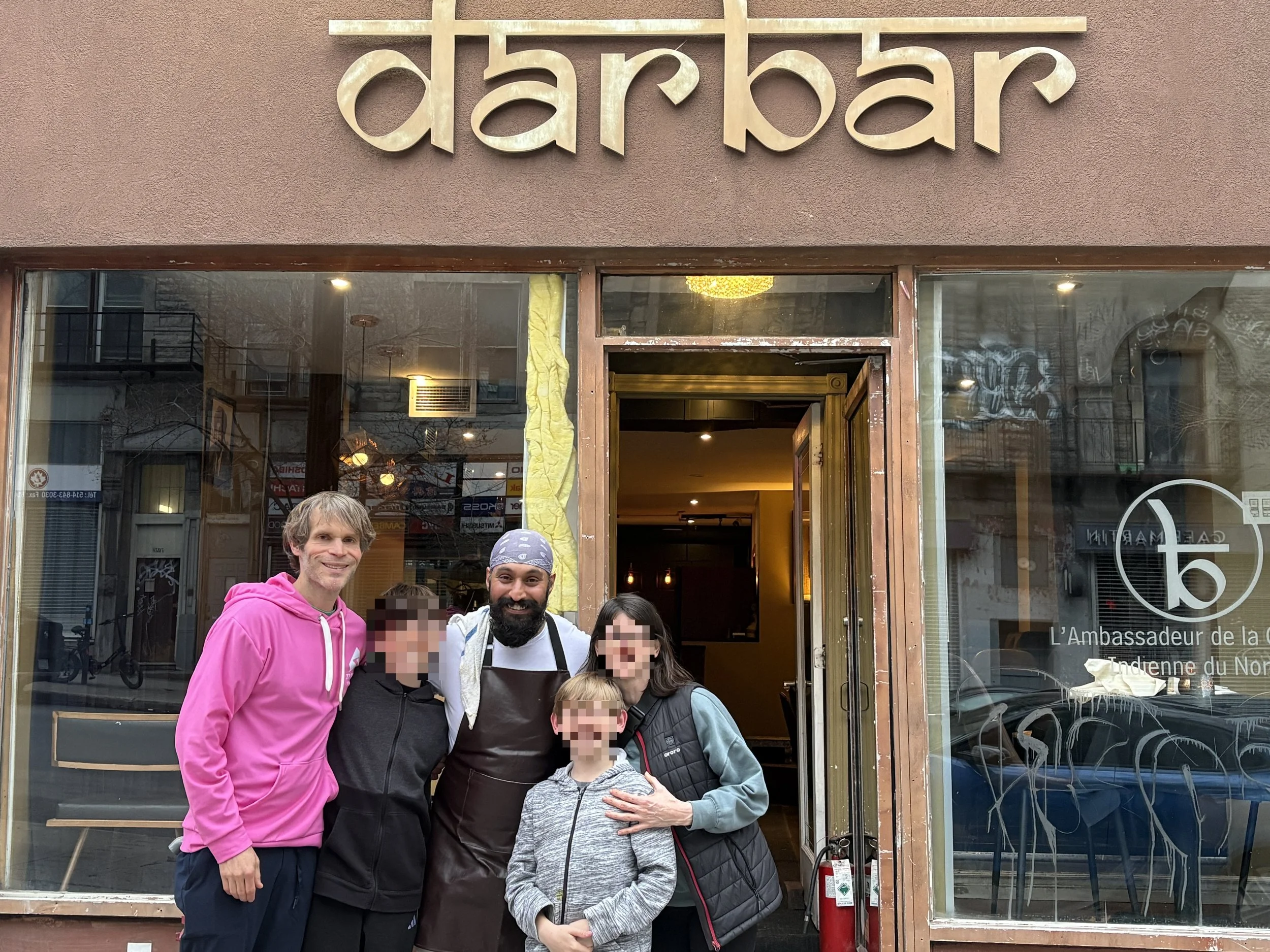
With Simar Anand after a memorable meal at Darbar in Montreal. Sometimes the best business lessons show up where you least expect them.
The food was excellent. In fact, we still talk about it today! But the real lesson was in the approach. He listened carefully, understood the constraints, adapted in real time, and delivered something that worked for everyone at the table.
That is what good client service looks like.
In professional services, it is easy to overvalue the standard offering: the process, the playbook, the usual answer. Those things matter. They create structure and efficiency.
But they are not a substitute for judgment. They will never replace the personal touch.
Every client arrives with a different set of facts, pressures, stakeholders, personalities, limitations, and goals. The job is not to force those realities into a pre-set model. The job is to understand the situation clearly enough to build the right approach.
That requires patience. It requires listening. It requires knowing when to guide, when to adapt, and when to solve the problem that is actually in front of you.
It also requires trust.
Relationships are not built through slogans or positioning. They are built through competence, consistency, and the experience of being understood. That requires a mindset that is increasingly rare: striving for understanding before seeking to be understood. The best professionals do this instinctively. They listen carefully, ask thoughtful questions, and take the time to understand what people actually need. People remember when you make something easier, clearer, or better than they expected.
Toward the end of the meal, we kept talking with Simar and learned that he is also a lawyer who spends a fair amount of time in Boston.
Of course.
The skill set travels: listen well, read the room, understand the constraints, and deliver.
That is true in a restaurant. It is true in business. It is true in advocacy.
There is no standard menu.
And that is the point.
Postscript: If you find yourself in Montreal, do yourself a favor and make a reservation at Darbar. The food is exceptional, but the experience is what you’ll remember.
Interested in more thoughts on advocacy, relationship building, and effective client service? Visit the Ruminationssection for additional articles.