A Win for Vet Techs and Animals across Massachusetts
Last week, the Massachusetts House passed “An Act Promoting Pet Equity, Treatment and Safety,” its monumental animal welfare bill. Included within the legislation is something 27 South Strategies has spent the past two sessions supporting, a bill to finally license veterinary technicians in Massachusetts.
I know, I know “licensure bill” doesn’t exactly get the pulse racing, but stick with me, because this one makes a real difference.
Right now, literally anyone can call themselves a vet tech
Here’s the thing that should bother you: in Massachusetts today, there’s no requirement to be a “veterinary technician.” None. Someone with a week of on-the-job training and someone with an actual degree and a national certification can both walk around with the exact same job title. And vet techs aren’t just holding leashes; they’re inducing and monitoring anesthesia, reading x-rays, placing IV lines, and providing the hands-on care that keeps sick and injured animals alive. That’s serious medicine. Massachusetts is one of the last states in the country that still doesn’t require credentialing for it, leaving it up to the heroic Mass Vet Tech Association to self-regulate this vital work space.
So what does the bill actually do?
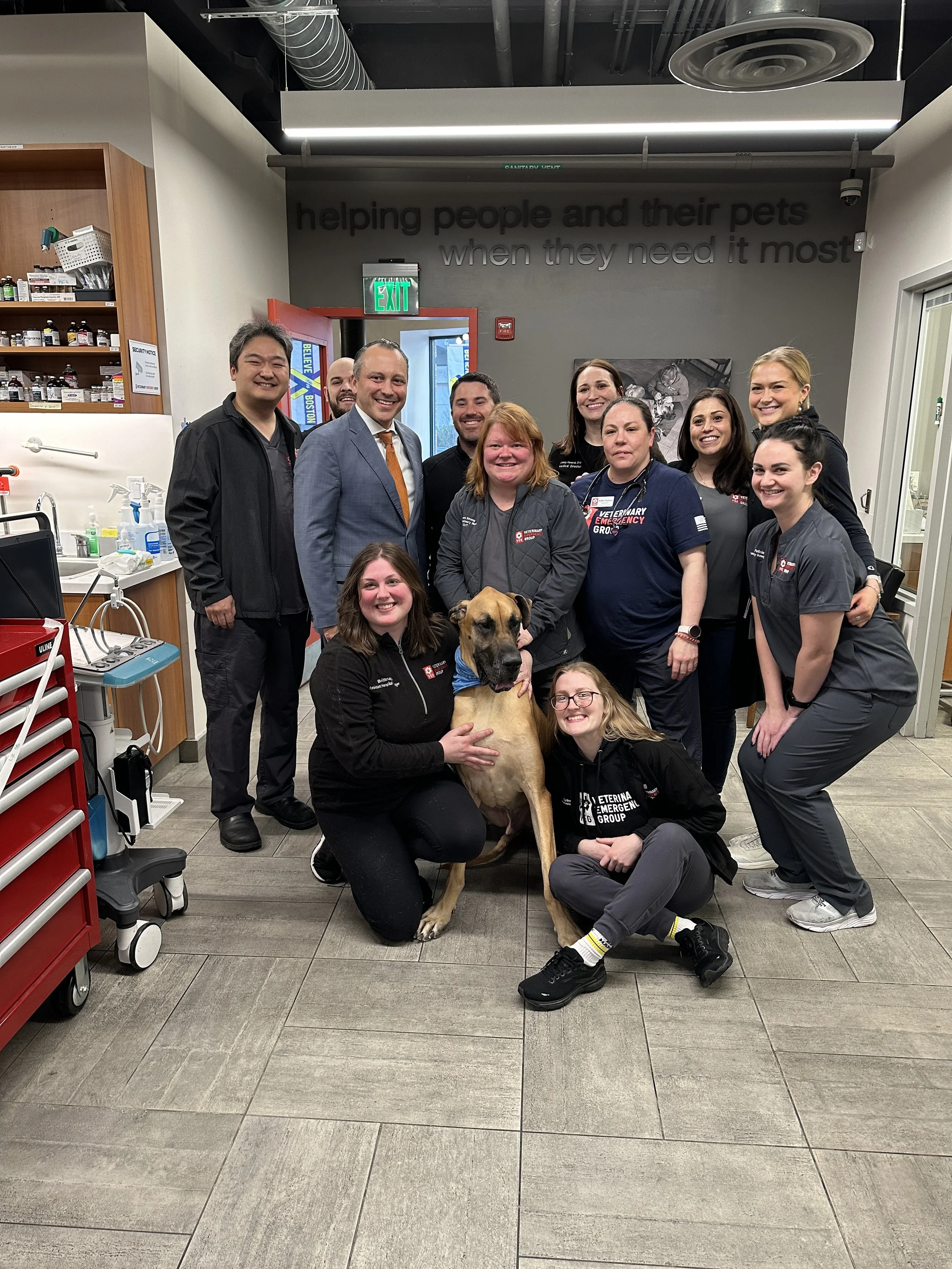
Mass House Ways and Means Chair Aaron Michlewitz joins Marty VEG leadership, and the Boston VEGgies.
House Bill 407 (Rep. Hunt) and its Senate companion, S.277 (Sen. Oliveira), direct the Board of Registration in Veterinary Medicine to get in the room and actually license and register vet techs, and set real education and practice standards for the job. It also puts licensed vet techs, appointed by the Governor, onto the Board itself. Therefore, the people setting the rules include the people who actually do the work. That part matters to me.
To get licensed, a vet tech would need to complete an accredited degree program, pass the national Veterinary Technician National Exam, and keep up with continuing education. Mind you, many vet techs already do this, but the State currently plays no role. Massachusetts already has the infrastructure to make this work. Four community colleges (Massasoit, Holyoke, North Shore, and Mount Wachusett) run accredited associate degree programs, and UMass Amherst runs the state’s last remaining four-year program.
And it’s not just us who thinks this makes sense. The Massachusetts Veterinary Medical Association, the American Veterinary Medical Association, and the National Association of Veterinary Technicians in America are all behind it. That’s a lot of alignment for one bill.
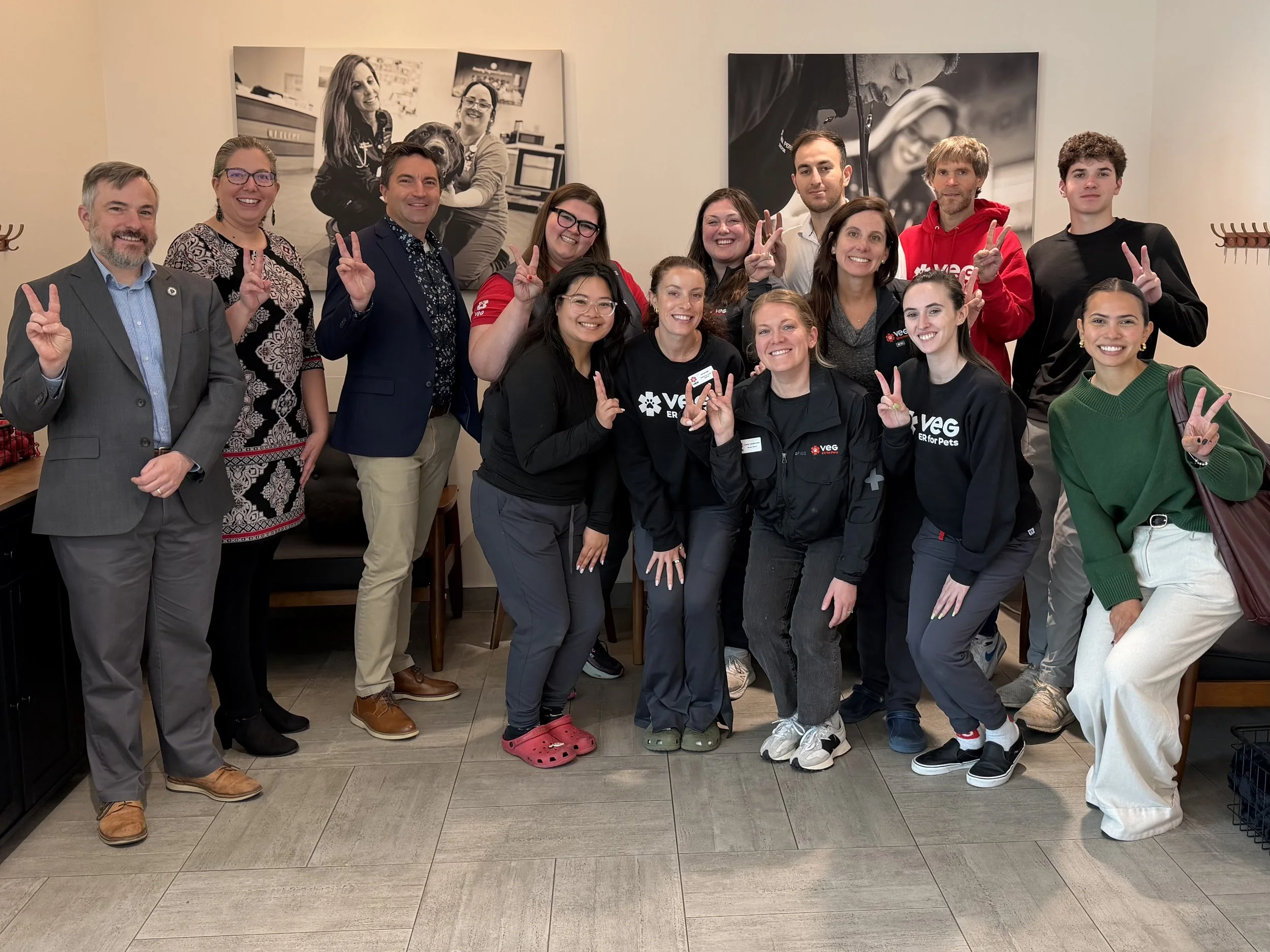
PAW(s) Caucus Co-Chairs Rep. Jack Lewis, Rep. Natalie Higgins, and Rep. Steve Owens join 27 South and the Cambridge VEGgies in action.
Credit where it’s due
Bills like this don’t move on their own, and this one owes a lot to people who dug in and made it a priority. Chair Tackey Chan, who leads the Professional Licensure Committee, has reported this bill out of committee for several sessions running, long before it had the wind at its back that it has now. Speaker Mariano and his team, and House Ways and Means Chair Aaron Michlewitz and his team, made room for it in a crowded omnibus bill, which is no small thing. And Reps. Jack Lewis & Natalie Higgins, who co-chair the PAWS Caucus, have been steady champions for this and every other animal welfare priority that’s crossed their desk. This bill got across the finish line in the House because a group of legislators, dedicated advocates, and companies decided it mattered enough to fight for.
Two things I keep coming back to
The first is jobs. Vet techs go to school, sit for a national exam, and build real clinical skill and up until now, providers could basically shrug at all of that. That’s not fair to the people who put in the work, and it’s terrible for a field that’s already stretched thin on staff. These are good jobs with real demand behind them. Licensure gives the profession the legitimacy it’s earned and makes it a career people can actually build a life around.
The second is what our pets mean to us now. Animals used to be things people chained up in the backyard. Now they sleep in our beds, and when we go on vacation, some of them stay in nicer hotels than we do. They’re family. Full stop. We’d never let an unlicensed, untrained person treat our kids; I don’t see why our pets should expect anything less.
Here’s the part I find genuinely interesting
Our client on this, VEG ER for Pets, is a for-profit veterinary emergency company. And they spent real time and real resources asking the government for more regulation of their own industry. That’s not something you see every day. But VEG gets it: a licensed, well-trained vet tech workforce is better for patients, better for the profession, and yes, better for business too. Sometimes doing right by the industry and doing right by your bottom line point in the same direction, and it was worth putting some muscle behind it.
This bill has been here before, sort of!
Here’s a piece of history worth sharing: his bill has languished for several years. It would move out of Committee, and then stall. It never made it to the House or Senate floor. This changed when VEG brought 27 South on board to help get this over the top last session. We developed a strategy, synced up with the advocates, and hit the ground running; helping it pass the House last session, for the very first time. That’s the part of this work I’m proudest of. We carried that momentum into this session, and THAT is what real, tangible results look like.
None of it happens without the Massachusetts Veterinary Technician Association, who’s been in this fight for years, and the vet techs, veterinarians, and VEG staff who made this real for policymakers. Rather than just talking about the bill on Beacon Hill, we brought legislators directly into a VEG hospital to see this work happen in real time: the vet techs monitoring anesthesia, placing catheters, doing the nursing care this bill is all about. Seeing it in person makes a different kind of case than any hearing room testimony can.
We’re not done yet
The House passing this is a real milestone, and I’m genuinely proud of it. But it’s not the finish line. The Senate passed its own version of this broader bill without the vet tech licensure piece in it, so now the two chambers need a conference committee to hash out the differences before anything lands on the Governor’s desk.
We’ll be right there for that next round, making the case for why this language needs to survive. For now, though, take the win. This is a real step toward giving the people who care for our animals the same professional standards we’d expect for anyone entrusted with a life.