Science Club for Girls: Connecting STEM Equity to Workforce Investment
In my line of work, most people see the outcome, not the process. Behind every bill signing, budget win, or policy success is a deliberate strategy, shaped over time from development through execution. Our work with Science Club for Girls (SCFG) followed that same path this session.
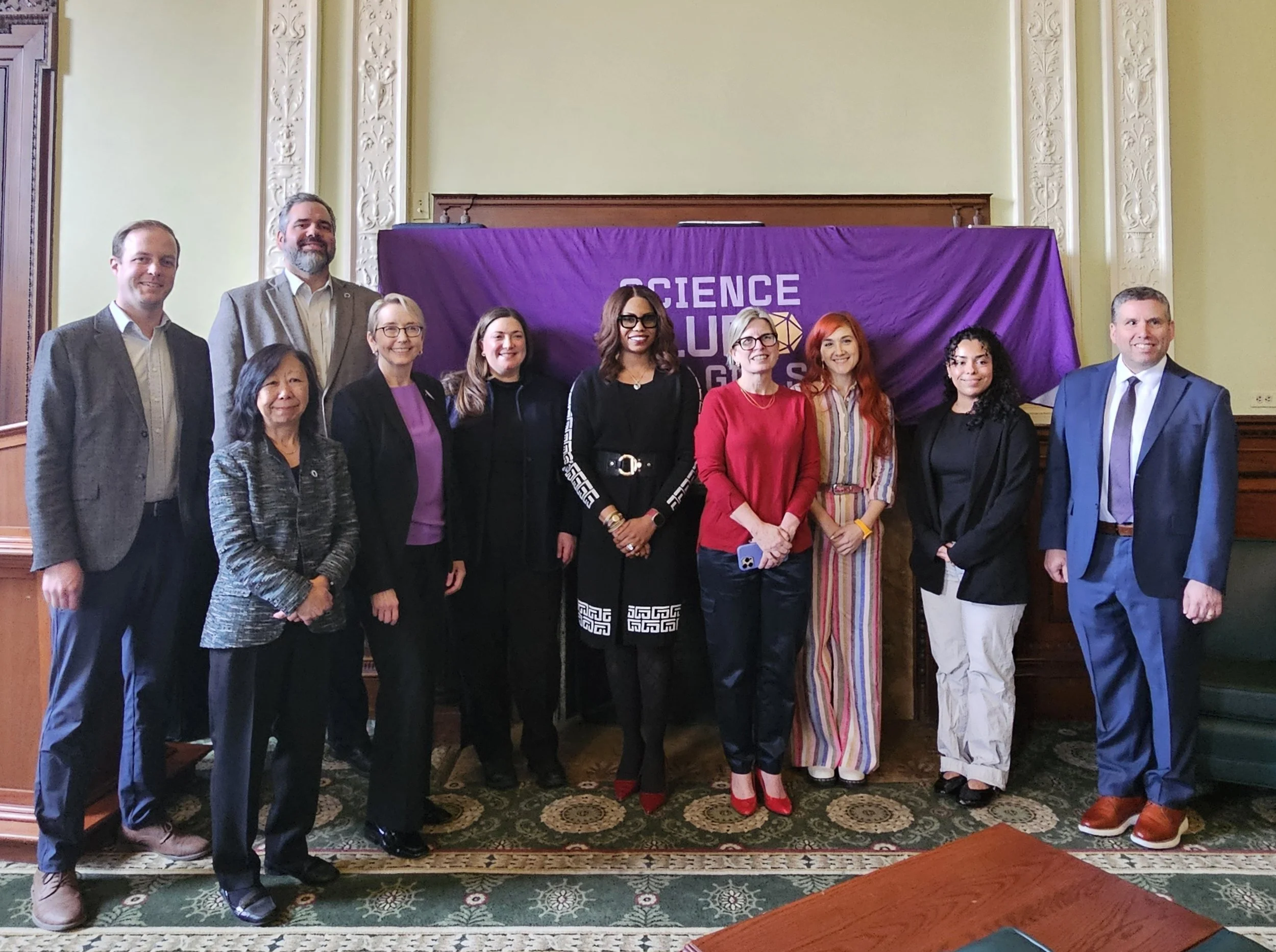
Legislators and Panelists from “The STEM Equity Pipeline: What Science Club for Girls’ Longitudinal Study Reveals About the Workforce Impacts of Investing in Girls.”
Turning STEM Access into a Budget Priority
Science Club for Girls has long delivered on the outcomes policymakers consistently prioritize: expanding access to STEM, building a more representative and diverse workforce while unlocking untapped talent. The challenge was not demonstrating impact, but rather getting attention: ensuring that, amid competing demands, this work was understood as an essential statewide workforce and economic priority, not simply a “nice to have” enrichment program.
Earlier this week, that strategy translated into a concrete result:
$100,000 in funding for Science Club for Girls was included in the House supplemental budget, filed and championed by Representative Marjorie Decker.
That outcome was the product of focused engagement, aligning SCFG’s work with legislative priorities, building support, and working closely with key leaders to move the request forward at the right time.
Building on Momentum at the State House
With that funding secured, the next step was to build visibility and deepen the connection with policymakers.
Working with Representative Decker and Senator Sal DiDomenico, SCFG convened a briefing at the Massachusetts State House titled: “The STEM Equity Pipeline: What Science Club for Girls’ Longitudinal Study Reveals About the Workforce Impacts of Investing in Girls.”
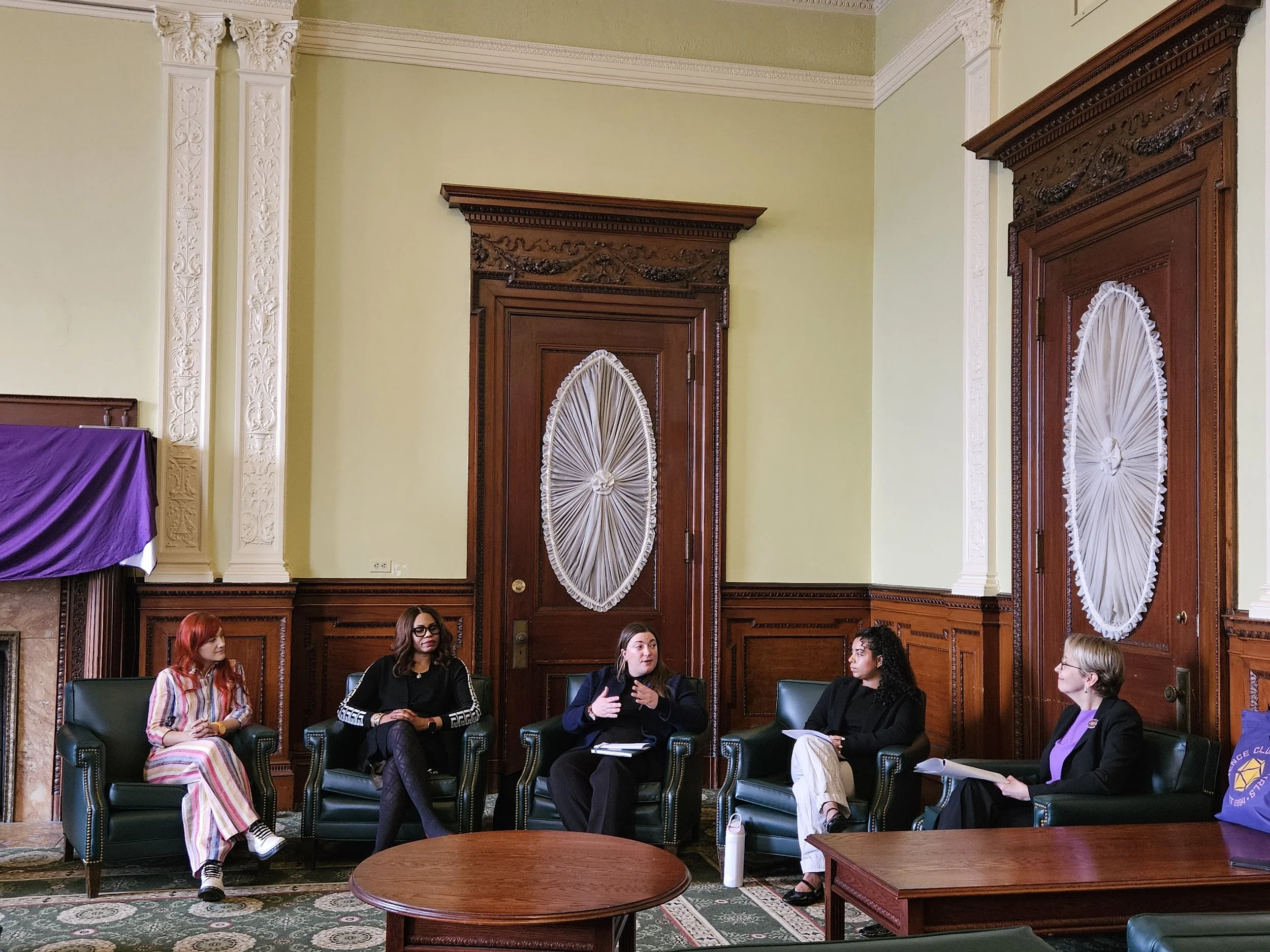
(left to right): Kaitlyn Webster, SCFG Board Member and Postdoctoral Research Fellow, Harvard Medical School; Ruby Opara-Collings, SCFG Board Co-Chair and Vice President, Global Head of Internal Audit at Haemonetics; Bryanne Bowen, Vice President of Development, Women’s Foundation of Massachusetts; Angell Munoz-Morales, Program Manager and SCFG Alum; & Bonnie Bertolaet, Executive Director, SCFG.
The briefing brought together legislators, staff, and leaders from across the education and nonprofit sectors to focus on a simple but important idea: Early and sustained investment in STEM education for girls directly shapes Massachusetts’ future workforce.
The conversation was grounded in SCFG’s longitudinal data, which shows that:
99% of participants attend college
63% pursue STEM majors
Those outcomes reinforce what many policymakers are increasingly recognizing; programs like SCFG are not just about access, they are about long-term economic competitiveness.
From Program to Policy Conversation
The goal of the briefing wasn’t just to share data, it was to position Science Club for Girls within a broader policy conversation about workforce development, equity, and the future of Massachusetts’ innovation economy.
By bringing together legislators and stakeholders in a State House setting, SCFG was able to:
Strengthen relationships with policymakers
Reinforce the case for continued public investment
Elevate its role as a leader in the STEM equity space
The Bigger Picture
At 27 South Strategies, this is how we think about government relations work.
It’s not just about securing funding.
It’s about:
Aligning mission with public priorities
Identifying the right moment to advance an issue
Building relationships with key decision-makers
Creating opportunities to shape how policymakers understand the work
When those pieces come together, outcomes like budget funding are not one-off wins—they become part of a broader strategy to build long-term support and influence.
For Science Club for Girls, this week was a strong example of what that can look like.