What Music and Massachusetts Policy Have in Common
How storytelling, authenticity, and community building drive real outcomes on Beacon Hill
At 27 South Strategies, we’ve seen that the ideas that move on Beacon Hill are the ones where people can feel a connection. A recent conversation with Craig Finn reinforced why storytelling is often the difference between a proposal that stalls and one that advances.
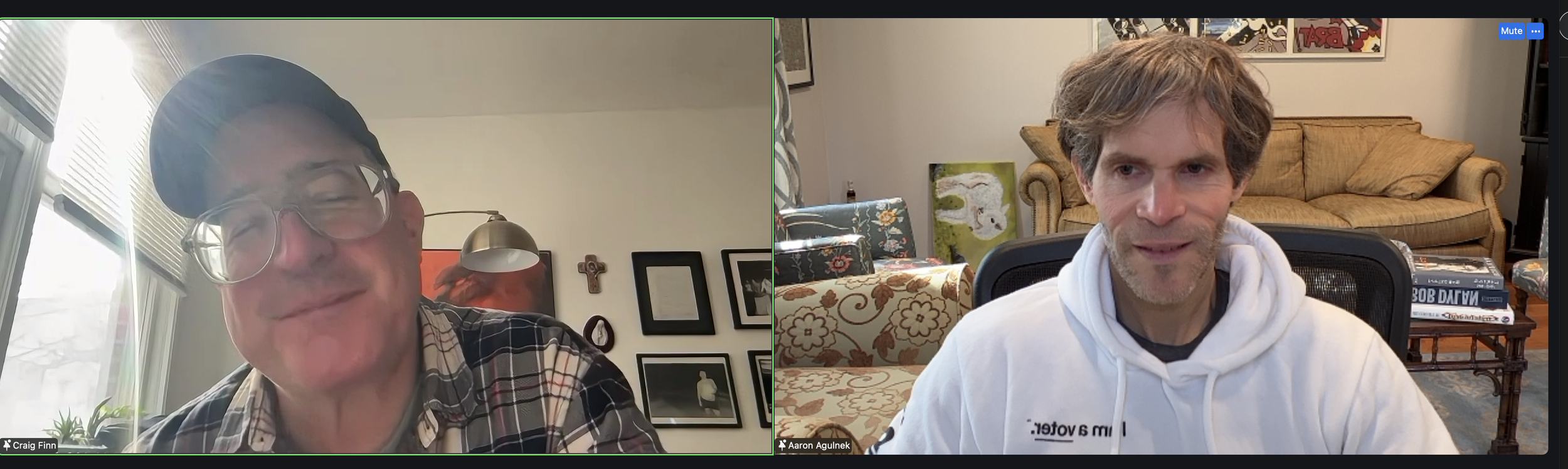
A conversation with Craig Finn at Emerson College on storytelling, connection, and ideas that resonate.
Maybe you wouldn’t expect an indie-rock songwriter to have much in common with Massachusetts public policy.
But I do, and that is exactly why I invited Craig Finn, the frontman of The Hold Steady, to my class at Emerson College.
Over time, through both teaching and my work at 27 South Strategies, I’ve seen that connection consistently reinforced. Those same elements that make music resonate are often the ones that determine whether an idea gains traction or quietly stalls on Beacon Hill. It comes down to connection.
Craig came in as a musician and writer, but it didn’t take my students long to realize he was speaking directly to something central to public policy and argumentation: how stories grab people’s attention, evoke an emotional response, create buy-in, and ultimately turn abstract ideas into something tangible.
The distance between songwriting and effective advocacy, especially here in Massachusetts, is smaller than it might seem.
“The ideas that move on Beacon Hill are the ones where people feel a connection.”
Making People Feel a Stake in the Outcome
I’ve seen this dynamic play out repeatedly in my work.
At 27 South, the most effective advocacy is rarely about volume, technical precision, or even the best ideas. It’s about helping policymakers see themselves, their districts, their constituents, and their priorities reflected in the outcome.
When a policy stops being abstract and starts feeling personal, it becomes much easier to move.
The work, then, is not just about informing. It is about creating connection.
Authenticity Isn’t a Buzzword. It’s a Strategy
These days, authenticity gets thrown around so often it risks losing meaning. But its value is very real.
Authenticity has always driven The Hold Steady. Craig talked about how his songwriting is rooted in real experiences, with rich, vivid imagery, even when the stories themselves are works of fiction, like his song Bethany. Those details allow listeners to feel as though they are there with the characters—seeing what they see, feeling what they feel, and shaping their perspective. That’s how you find the universal in the specific.
The same dynamic shows up in Massachusetts policy.
Whether you are advancing a budget item, shaping legislation, or building municipal support, the most effective advocacy is grounded in lived and relatable experience. You won’t fool a Massachusetts legislator with a manufactured and manipulated message, you need to deal in reality.
The latter builds trust. And trust is what allows things to move.
“Trust is what allows things to move.”
Building Community on Beacon Hill and Beyond
We also spent time talking about the human need of belonging and community, something Craig and his bandmates have been intentionally cultivating through their live shows for years.
Shared rituals, familiar language, and moments of recognition turn an audience into something more than a crowd. Over time, that sense of belonging begins to sustain itself.
If you have ever been at a Hold Steady show and felt an entire room rise together to chant “We are Hold Steady,” you understand how powerful that can be. That connection is central to their identity and is a direct result of that sense of community that the Hold Steady cultivates. It is not contrived, but rather a relationship build on trust and mutual respect.
That emphasis on community felt familiar.
In Massachusetts, durable policy outcomes are rarely transactional. In our work at 27 South, progress almost always comes from sustained engagement, briefings, coalition work, follow-ups, and treating policy not as a one-time ask, but as a shared effort over time. Authenticity. Connection. Trust.
The Power of Indirect Storytelling
Craig noted how difficult it can be to write directly about current events or policy issues. Instead, he often approaches them indirectly, through narrative and character, allowing audiences to arrive at their own conclusions.
That lesson carries over.
Some of the most effective moments in advocacy do not come from winning an argument outright, but from giving people the space to arrive at an idea on their own. In an environment like Beacon Hill, where credibility compounds over time, that approach matters.
Empathy as the Throughline
By the end of the conversation, everything kept coming back to one central idea: empathy.
Craig spoke about focusing on universal human experiences rather than headlines. That is what allows his work to resonate across audiences and endure.
In Massachusetts policy, the same principle applies.
Some of the most meaningful progress happens when issues are framed not as technical debates, but as human ones, when a legislator sees their district in the story, when a staffer understands the real-world impact, when a coalition recognizes shared stakes.
That is when momentum builds.
Why This Matters
At 27 South Strategies, our work sits at the intersection of strategy, relationships, and execution across state and municipal government.
But underneath all of it is storytelling, not as a tactic, but as a way of understanding how people make decisions.
Helping clients clearly articulate who they are, what they do, and why it matters is rarely about simplifying policy. It is about grounding it in something real and making it legible to the people who need to act on it.
The conversation with Craig was a reminder that whether you are writing a song or advancing a policy priority, the objective is the same:
Create a narrative where people can see themselves and feel they have a stake in the outcome.
Because when that happens, things move.