I walked up to a stranger at a conference and introduced myself. That's the origin story of one of my guest speakers this semester.
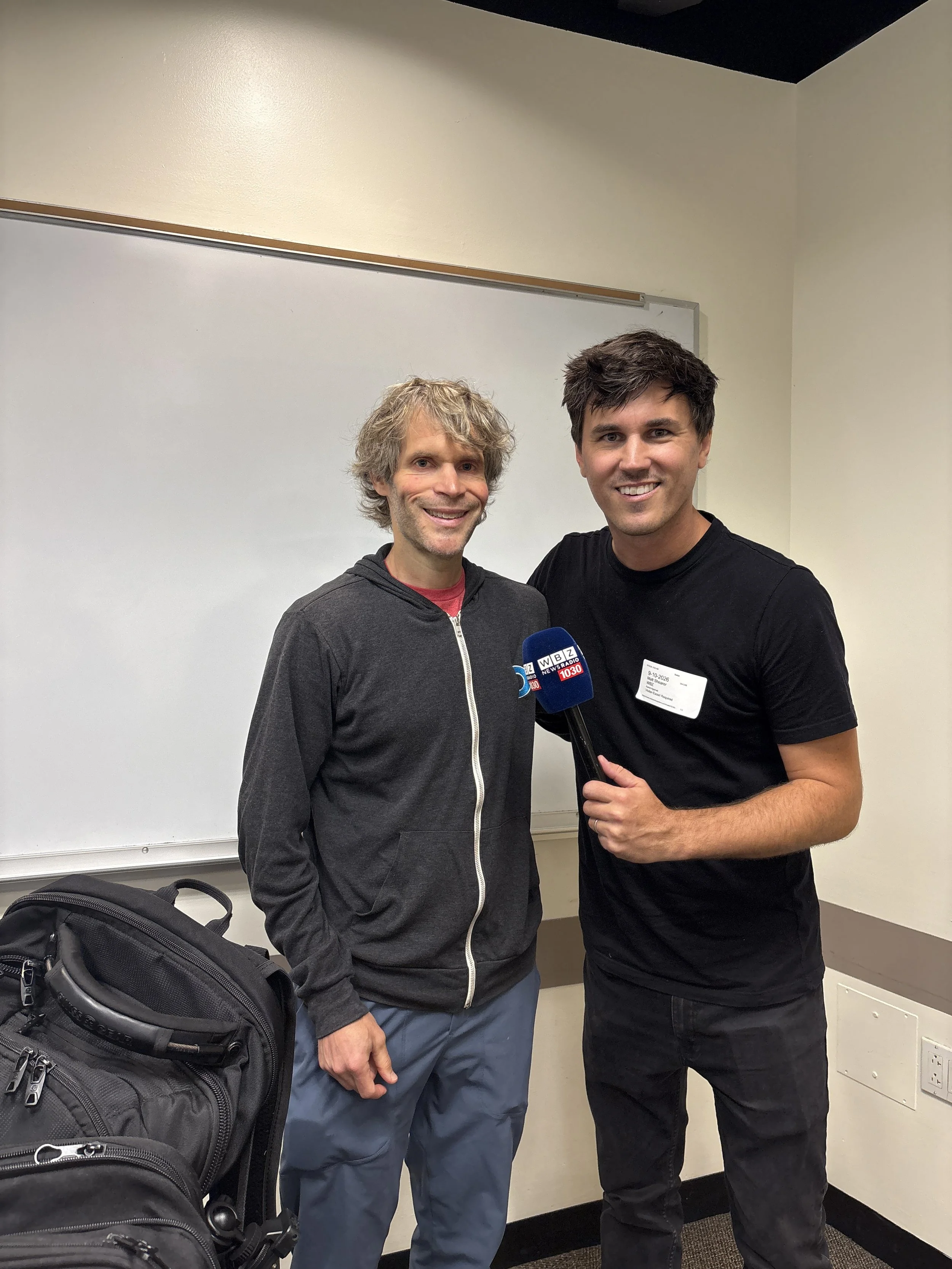
Aaron Agulnek (left) behind Matt Shearer’s famous WBZ NewsRadio microphone.
The stranger was Matt Shearer of WBZ NewsRadio. If you don't know Matt, you've probably at least seen his viral Dunkin' social media posts. I sure had, and I was a big fan. I'd just heard him speak and thought we'd hit it off, so I struck up a conversation. Somewhere in there we found our connection (like I tend to do): he's an Emerson alum, and I teach there.
Flash forward to the Fall 2026 semester: he's been in my Emerson classroom, sharing the viral videos he makes with everyday Massachusetts people. So has Judge Beth Bloom of the U.S. District Court for the Southern District of Florida, whose visit came out of a conversation with my department chair. So has Representative Jack Lewis of Framingham, whom I've worked with at the State House for years.
Three guests, three paths into the room: a conversation at a conference, a department chair's request to host a judge I'd never met (but deeply respected), and a relationship forged over years of work together at the State House. Different starting points, same result: a real connection, built by dialogue.
Had I not asked Matt about his background, I never would have found our Emerson connection. That's the first lesson: when we're genuinely curious about people and their stories, we discover things we'd otherwise miss.
A reporter, a judge, and a legislator
On paper, they don't have much in common. Matt gets people to tell their stories. Judge Bloom evaluates high-stakes arguments from people trying to persuade her. Representative Lewis has to build a majority out of colleagues who start in very different places.
But they kept landing in the same spot.
Matt shows up curious. He believes everyone has a story worth telling, and he notices what makes each person unique. He brings his own perspective but most importantly, creates space for theirs.
Judge Bloom put it from the other side of the bench: our backgrounds and lived experiences shape how we evaluate arguments. You can have the research and the facts on your side and still fail to connect, because what you meant to say and what people hear are two different things. The only way to close that gap is to be curious about the person across from you.
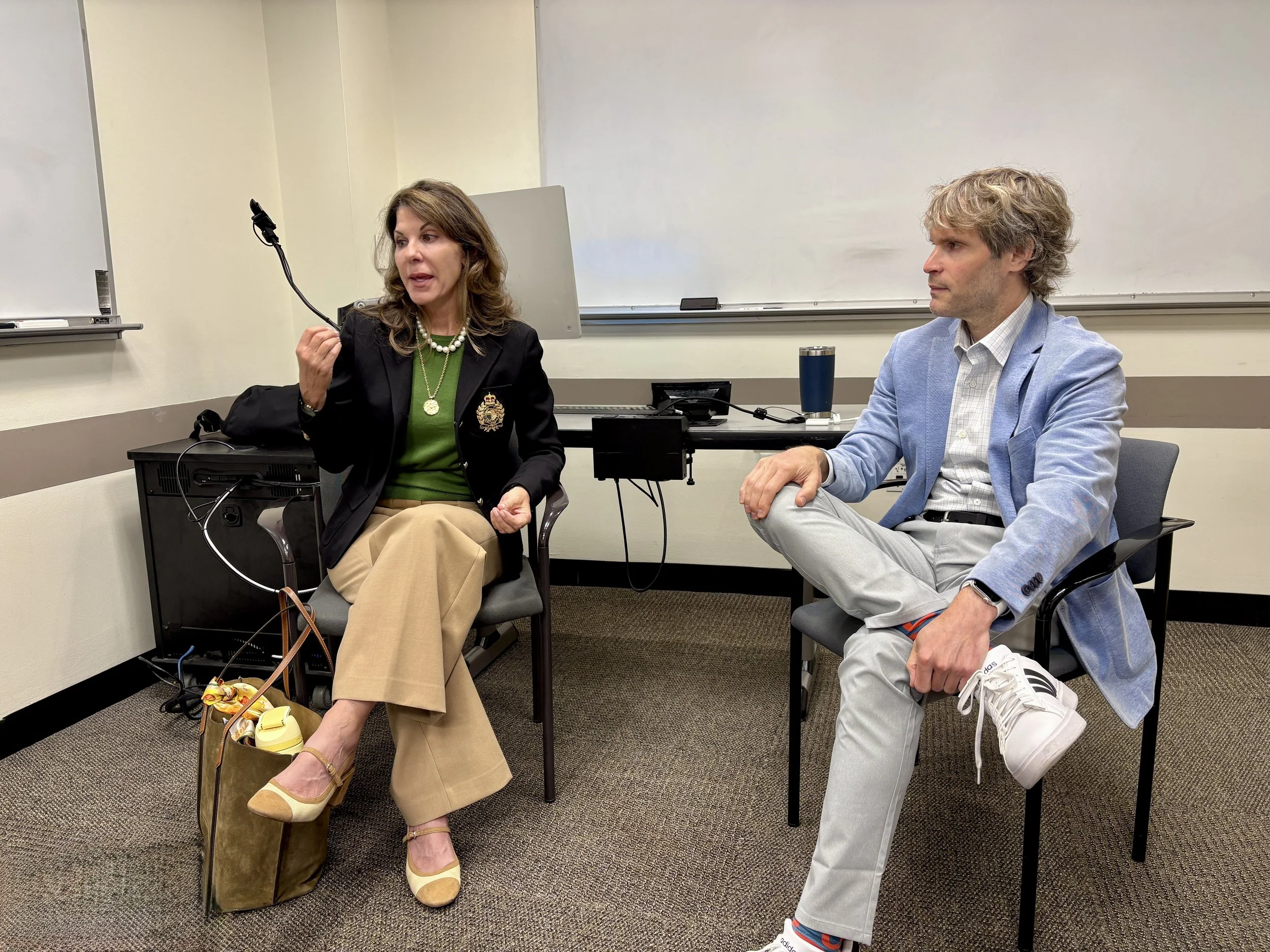
Judge Beth Bloom of the U.S. District Court for the Southern District of Florida, and Aaron Agulnek
Representative Lewis is a great legislator who gets real results in a building where that's hard. He talked about how much of it comes down to listening: to colleagues in the House and Senate, to constituents, to activists and advocates. He wants to understand what motivates each of them so he can find the common ground. Then he channels that passion and builds consensus.
Call it listening, call it empathy, call it good politics. I call it curiosity.
That's the job in government relations, too. (I promise this isn't a stretch.)
Facts are the bones
Before you advocate for anything, you have to understand who you're talking to, what drives them, and what they'll hear when you open your mouth. Then you have to translate it. The facts give a story its bones. The human experience is why anyone should bother caring.
At 27 South, I work on policy, but a big part of the job is building bridges. On one side is a line in a budget or a bill number. On the other is somebody's actual life. It is my job to help lead people to make those connections. This is the essence of policy making.
Drop the script
This was Judge Bloom's advice, and it's the one that stuck. Meaningful professional relationships start with showing up as yourself and being curious about someone else.
Representative Lewis is proof. He brings his personality to the front. He isn't shy about humor or the things that make him unique, and that doesn't cost him credibility on Beacon Hill. It's the opposite. People trust someone who sounds like a person.
I want my students and clients to find that voice. Not a polished imitation of what an advocate is supposed to sound like, but their own, and enough trust in it to use it.
We don't have all the answers
Here's the humbling part. Judge Bloom's other advice was to keep listening: pay attention to how your argument lands and be willing to adjust. Matt's whole craft is the same discipline. He doesn't walk in knowing the story. He asks, listens, and finds it. Representative Lewis does it every day with people who disagree with him.
None of them treat not knowing as a weakness. It's where the curiosity starts. You meet people where they are, find the story that makes them tick, and let them surprise you.
The best advocacy isn't about having the best script. It's about being curious enough, and earning enough trust, that someone tells you what's really at stake.
Relationships are how you earn it, whether they come through a formal invitation, a conversation at a conference, or years of showing up and working together.
So, drop the script. And stay curious.