When imagining physical spaces, we draw on our own experiences, assumptions, and expectations to envision what it might look and feel like. We can study plans, examine models, and visit comparable spaces, but there's simply no substitute for walking into a room and taking it all in.
Seeing and experiencing something is what closes the gap between our imaginations and reality. Oftentimes, the real thing is nothing like the picture we conjured in our minds, whether it is an entirely novel concept that deviates from the norm or something grander than out imagination suggested.
Being there provides the pathway for a deeper understanding.
This is why inviting policy makers and community leaders to visit client spaces is core to the 27 South experience. Nothing beats watching that lightbulb go on, witnessing the aha moment, and seeing the spark that builds relationships. These first-hand experiences give the guests a stake in our clients’ success. A front row seat.
Last month, I got to see it happen twice, on two tours with legislators and civic leaders.
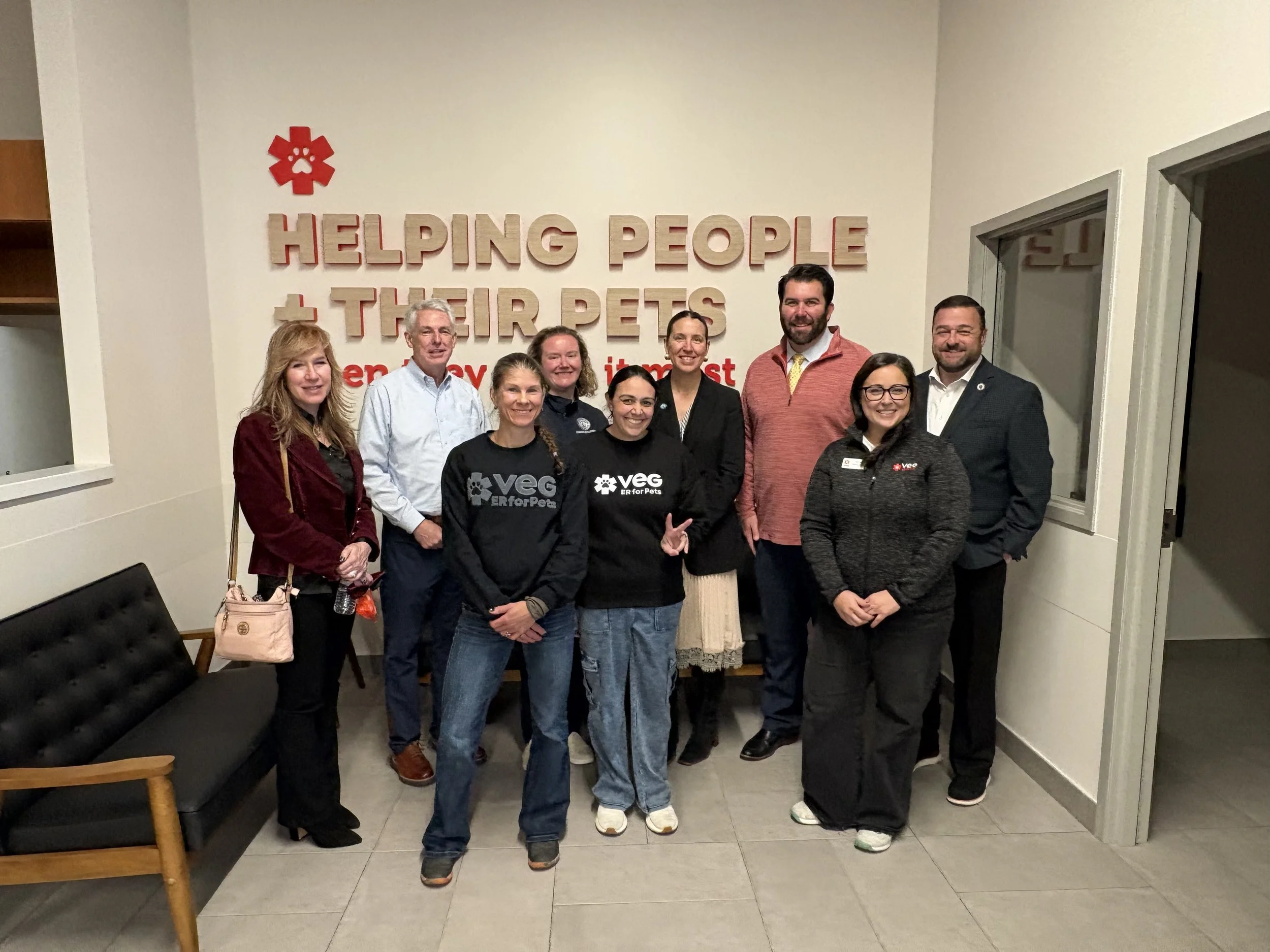
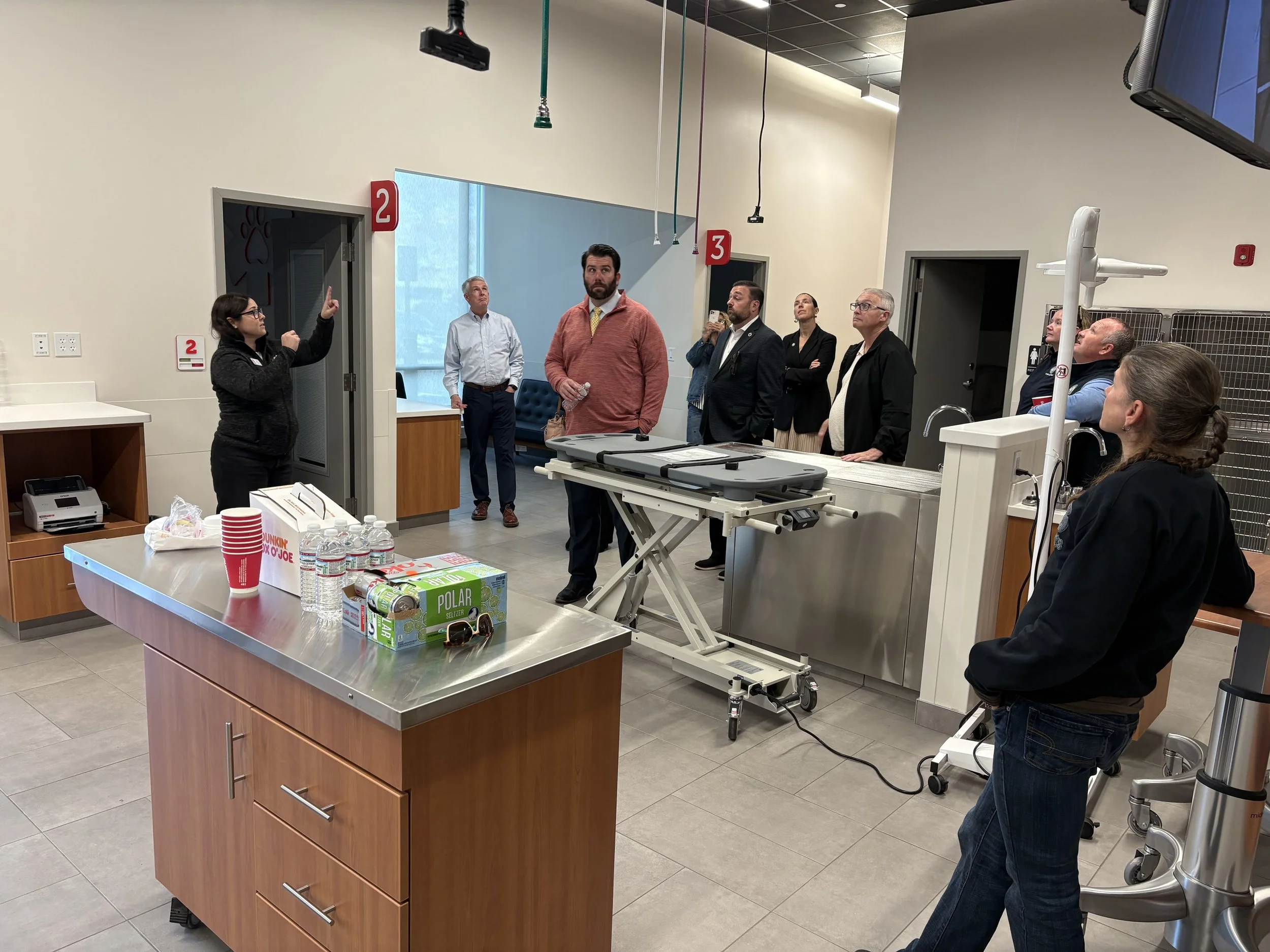
On October 22, Senator Bill Driscoll, Senator John Keenan, Representative Ted Philips, Mayor Erin Joyce, and more joined me for a behind-the-scenes look at the brand new VEG ER for Pets in Braintree before it opens. They saw the equipment, met some of the VEGgies running the hospital, and learned about how VEG will support the broader community.
Senator Driscoll, whose district includes Braintree, put it in terms that every pet parent understands:
“Anyone who has ever rushed a sick or injured pet to get help knows how stressful those moments can be. That’s why it was encouraging to see the new VEG ER for Pets facility in Braintree… I am excited to see VEG ER for Pets contribute to making more jobs available in the district that I proudly serve.”
Five days later, we supported a different kind of visit in another part of the state. Holyoke Mayor Joshua Garcia, State Senator John Velis, State Representative Pat Duffy, and several colleagues walked through the MIFA Victory Theatre on Suffolk Street in Holyoke.

You’ve got to see this up close
Here's the thing about public investment: on paper, there is no opportunity for emotional connection. It is a number in a budget. An intangible item.
In the building however, it is a plaster ceiling that someone is restoring by hand.

You can't get that from a PowerPoint. You can't get it from a memo. You can’t get it from a fact sheet. And I say that as someone who writes a lot of memos. When a legislator stands in a room and looks around, the conversation changes. The moment when MIFA's Executive Artistic Director Don Sanders shined his flashlight up at the ceiling … chills.

That's the point of these visits. Not a photo op. A reality check, in the best way.
Direct advocacy is only a part of our work. The rest is creating moments like these, and nurturing relationships that grow out of them. That is how we build momentum.
Same goes for the hospital in Braintree. A floor plan gives you square footage. Walking the treatment floor and meeting the team gives you the scale of the building and a sense of how many people it takes to run the place. From the moment these policy makers walked in the door, they were blown away by the VEG way of doing things. You cannot help but feel the vibe. Nothing beats that!
So why should a theater matter to a budget hawk?
I know, I have heard it before. "Arts funding" isn't the first thing that comes to mind when you're staring at a tight budget and a long list of priorities. It can feel like a luxury. But it matters. Stick with me.
A restored theater is an anchor. When a historic theater goes dark on a downtown street, the entire block feels it. When it reopens, people come early for dinner and stay late for a drink. They park, they shop, they hire a babysitter. The restaurant next door adds a Thursday shift.
That is not a metaphor. That is payroll.
And those dollars don't stay in the lobby. Jobs, meals taxes, property values, and new businesses on the same street all feed the revenue that our cities and states need to support essential community services: public safety, schools, housing, workforce training. It is a force multiplier.
Holyoke's numbers show how. Construction is already underway and will create 100+ direct jobs and 300+ construction jobs, supported by $37 million in local earnings in the area over the 18 to 24 month build.
Then the doors open. Every year, the Victory is expected to host over 130 events and bring 75,000+ visitors to downtown Holyoke. That supports 140 jobs at the theater and another 40 indirect jobs, with an annual economic impact of $3.8 million in operating expenditures and $1.5 million in audience spending. That is real money.
Holyoke's mayor puts it in plain terms:
“This is a key anchor opportunity that can help spur further development in our downtown. Not only is it going to be good for the arts and cultural entertainment area, it’s going to be good for further development and new business opportunities for our city.”
So the arts are not competing with those priorities. Done right, they help pay for them.
A hospital is an anchor, too
Different building, same math.
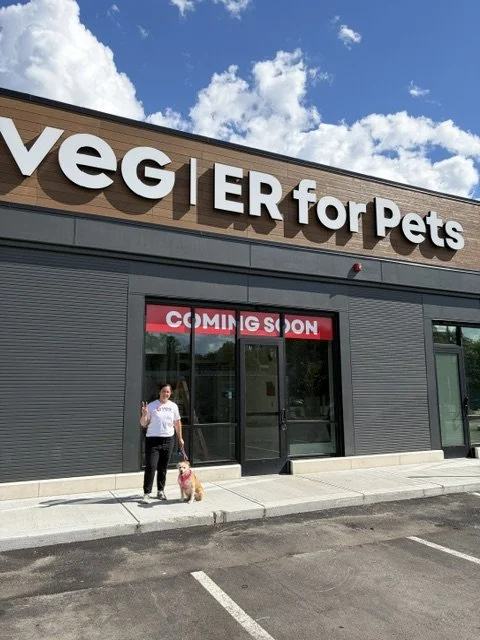
A new emergency hospital for pets does not operate in a vacuum. It is a building full of people with jobs: veterinarians, vet nurses and assistants, front desk staff, and more. Many are new employees, hired right from the surrounding communities. In fact, VEG scheduled a recruiting event for local job seekers the very next day! That's the thing about a new facility. The paychecks start before the doors open.
Those paychecks get spent in the region. They show up in local spending, in tax receipts, and in the lunch rush at the place down the road. I know that I will be forced to visit the local ice cream shop right across the street.
But its not just employing talented people that sets VEG apart. They are just different.
But don't take my word for it. Here is Ashley Harrington, VEG's Nursing Manager in Braintree:
“Finding VEG ER for Pets opened doors and career pathways I never imagined possible, allowing me to bring my experience in patient care and teamwork into new opportunities for leadership, hospital operations, and personal and professional growth. One of the most meaningful parts of this journey has been to share the heart of VEG and the veterinary community with local legislators, helping to educate and connect our community with the incredible work we do and the difference we make… Caring for animals also means caring for the people and communities who love them!”
That is what it is all about. VEG does not just care for your animals; they invest in their employees and in their communities.
And it's worth saying plainly: for a lot of families, the patient in the waiting room is family. A hospital that is open when it counts is part of what makes a community a place people want to live.
Renewal that people can feel
Holyoke has watched its downtown go through a lot. The Victory is a bet that a historic building can be another spark for urban renewal, not just another ghost, cleared to make room for a parking lot.
That bet got started because the MIFA team, in the face of deep skepticism and doubt, has kept the dream alive and done the unglamorous, years-long work of turning a vision into a construction schedule.
It became real because of public partners with a vision, willing to invest early, including the Healey-Driscoll Administration, Mayor Garcia, Senator Velis, and Representative Duffy, who have consistently been there to keep the fires lit.
There is something else that rarely shows up in an economic impact study. A theater gives a city a source of pride. It gives kids somewhere to see themselves on a stage. It tells a neighborhood that someone is still betting on it.
Try putting that in a spreadsheet.
We're not done yet
The lights aren't on. Not yet. There is still work to do, funding to line up, and plenty of colleagues who haven't walked through the doors.
So if you're a legislator, a local official, or a skeptic with a fair question about return on investment: come see it for yourself. Bring the hard questions. I'll bring the coffee.
Seeing things up close may change what you think is possible.
This is why community relations is such a big part of the job. It is not just lobbying for bills or untangling sticky problems. It is creating these experiences and building the relationships that come from them.
And on opening night at the Victory, I plan to be in the front row. Break a leg.